
Best Packaging for Milk: Carton vs Bottle vs Pouch vs Glass
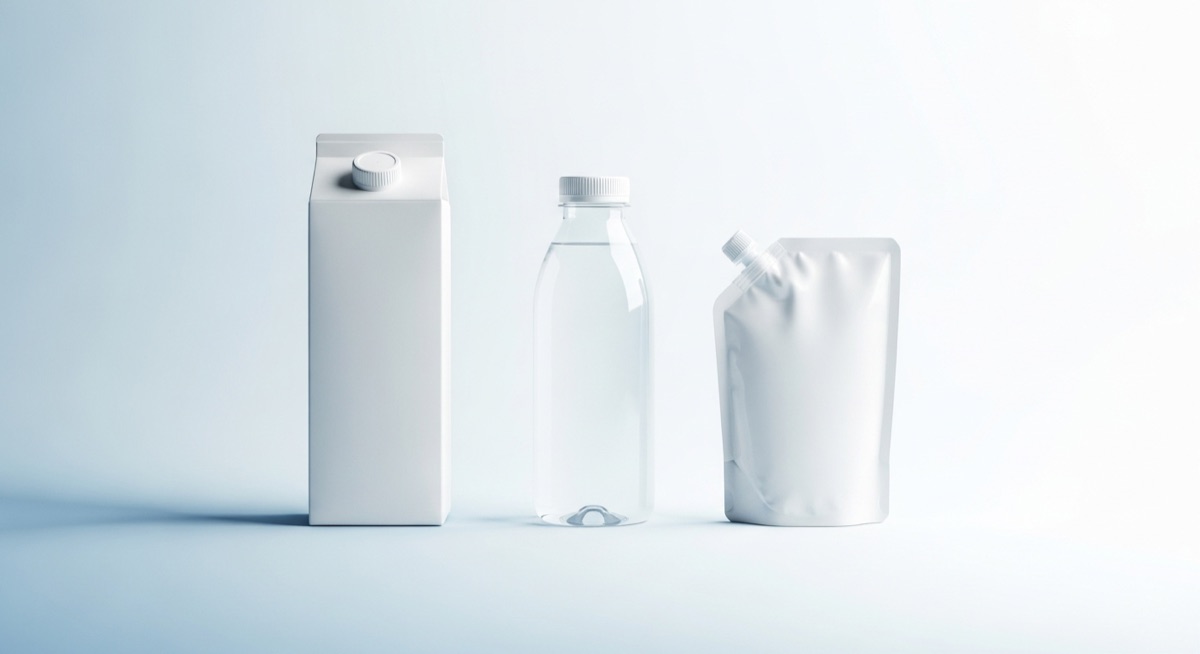
The best packaging for milk depends on three factors: whether the product is UHT long-life or fresh chilled, the distribution infrastructure of the target market, and the producer's cost and sustainability targets. Aseptic multilayer cartons are the globally dominant format for UHT milk, accounting for the majority of packaged long-life milk volume worldwide, because they deliver a 6–12 month ambient shelf life at a competitive cost per litre. Plastic bottles — primarily HDPE — lead in fresh chilled markets. Flexible pouches offer the lowest material cost but require investment in consumer education. Glass remains a niche premium format. This article compares each format in depth so dairy producers can make an informed sourcing decision.
The four main milk packaging formats
Across global and MENA dairy markets, four packaging categories account for virtually all retail and foodservice milk volume. Each has a distinct technical profile, cost structure, and market fit.
Definition
A milk packaging format is the combination of material, structure and filling technology used to contain and preserve liquid milk from the point of processing through to the consumer. The format determines shelf life, cold-chain requirements, recyclability, branding surface area and unit economics.
Aseptic multilayer carton
The aseptic carton — often referred to generically as a "long-life carton" or "brick carton" — is a laminate of paperboard, low-density polyethylene and a thin aluminium foil layer. The foil provides an absolute barrier to oxygen and light, which, combined with aseptic filling technology, gives UHT milk a shelf life of 6–12 months at ambient temperature. Cartons are supplied to the filling line in roll or pre-cut blank form, formed, filled and sealed in a single continuous process.
Plastic bottle (HDPE and PET)
High-density polyethylene (HDPE) is the standard material for fresh chilled milk bottles across many markets. HDPE is food-safe, relatively low cost, and provides adequate moisture barrier — though its oxygen and light barrier is significantly weaker than the aluminium foil layer in an aseptic carton. PET bottles are used for some aseptic and extended-shelf-life (ESL) applications, particularly where clarity is a branding priority. Aseptic HDPE bottles — blown and filled in a sterile environment — can also be used for UHT milk with comparable shelf life to cartons.
Flexible pouch
Flexible film pouches — typically multilayer laminates of polyethylene with or without an aluminium foil or EVOH barrier layer — are the lowest-cost format by material weight per litre. In some markets, including parts of South Asia and sub-Saharan Africa, the 200 ml or 500 ml pillow pouch is the dominant retail format for fresh pasteurised milk. Aseptic versions with barrier films are used in some MENA markets for UHT milk. Pouches require specific display and handling at retail — they cannot stand independently without secondary packaging.
Glass bottle
Glass is the oldest milk packaging material and the only format that is genuinely infinitely recyclable without quality loss. It offers excellent chemical inertness and a premium tactile quality that resonates with artisan and organic dairy brands. However, glass is heavy (adding significantly to transport emissions and logistics cost), fragile, and requires deposit-return or dedicated collection infrastructure for its sustainability advantage to be realised. Glass accounts for a very small share of total milk packaging globally.
Format comparison: shelf life, barrier, cost and sustainability
The table below summarises the key performance attributes of each format. Values reflect typical industry parameters; actual figures vary by specific product, process and supplier.
| Format | Typical shelf life | Cold chain required? | Oxygen barrier | Light barrier | Relative material cost | Recyclability |
|---|---|---|---|---|---|---|
| Aseptic multilayer carton | 6–12 months (ambient) | No | Excellent (Al foil) | Excellent (Al foil) | Medium | Moderate (multilayer; specialist stream) |
| HDPE bottle (chilled) | 7–21 days (refrigerated) | Yes | Moderate | Poor (translucent) | Low–Medium | Good (widely recyclable) |
| Aseptic HDPE bottle | 3–6 months (ambient) | No | Moderate | Poor–Moderate | Medium | Good (widely recyclable) |
| Flexible pouch (fresh) | 7–14 days (refrigerated) | Yes | Low–Moderate | Low (unless foil layer) | Very low | Poor (film; not widely recyclable) |
| Aseptic pouch (barrier film) | 3–6 months (ambient) | No | Moderate–Good | Moderate (with Al) | Low | Poor (multilayer film) |
| Glass bottle | 7–14 days (refrigerated) | Yes | Excellent | Poor (clear) / Good (amber) | High | Excellent (infinitely recyclable) |
Barrier performance and shelf life in detail
Shelf life in milk packaging is driven primarily by two barrier properties: oxygen transmission rate (OTR) and light transmission. Oxygen accelerates lipid oxidation (causing off-flavours) and supports microbial growth in non-sterile products. Light degrades vitamins — particularly riboflavin (B2) — and initiates photooxidation in fat-containing dairy products.
The aluminium foil layer in an aseptic carton creates a near-zero OTR and blocks light completely. This, combined with the aseptic fill and the hermetic heat-seal, explains why a UHT carton can maintain product quality for six months or more at room temperature. No plastic material — including PET or multilayer PE/EVOH/PE — fully matches the barrier performance of aluminium foil, though they come closer with increasing laminate complexity and cost.
For fresh pasteurised milk, barrier performance is less critical because the product is kept refrigerated and consumed within weeks. In this segment, the economic and logistical properties of HDPE bottles — their durability, resealability, and low weight — typically outweigh any barrier deficit. However, light-induced oxidation in translucent bottles remains a genuine quality issue, and some producers are moving to pigmented or foil-labelled HDPE to address it.
See our article on UHT vs. fresh milk packaging for a deeper analysis of how processing method drives packaging requirements.
Cost economics: material, filling line and logistics
Unit packaging cost is only one element of the total economics. A full cost comparison must include filling line capital cost, throughput, material waste rates, secondary packaging, and logistics cost per litre delivered.
Material cost
Flexible pouches have the lowest material cost per litre — the film weight per unit is minimal and polymer feedstock costs are relatively stable. Aseptic cartons carry a higher material cost per unit because the laminate includes paperboard and aluminium foil; however, at high volumes the cost per litre is competitive with HDPE bottles. Glass has the highest material cost per unit and adds the highest weight per litre, inflating transport costs significantly.
Filling line investment
Aseptic carton filling lines — particularly high-speed lines — represent a substantial capital investment. The filling machine, UHT system, CIP/SIP infrastructure and clean room environment together constitute a significant project. Pouch filling machines are generally less capital-intensive. Bottle fillers (blow-fill-seal or separate blow-moulding plus aseptic filler) sit in between. Glass bottle lines, with their washing, filling and capping systems, can also be capital-intensive.
Logistics
The ambient distribution advantage of aseptic formats (cartons, aseptic bottles, aseptic pouches) can generate significant savings versus chilled formats over long supply chains. Eliminating refrigeration at every stage — from the factory gate to the distribution warehouse to the retail shelf — substantially reduces energy costs and product losses. In MENA markets with high ambient temperatures and long distances, this advantage is particularly pronounced.
Sustainability: recyclability, carbon footprint and lightweighting
No milk packaging format has a straightforward sustainability story. Each involves trade-offs between material origin, carbon footprint in production, weight in logistics, and end-of-life recyclability.
Aseptic cartons
Aseptic cartons are approximately 70–75% paper fibre by weight, sourced from certified sustainably managed forests by the major laminate suppliers. Their carbon footprint per litre of milk delivered is relatively low compared to glass. However, the multilayer laminate — paper, polyethylene, and aluminium foil bonded together — requires specialist recycling infrastructure. In countries with well-developed carton recycling programmes, the paper fibre and aluminium are successfully recovered. In markets where this infrastructure is absent, cartons go to landfill or incineration.
HDPE bottles
HDPE is one of the most widely recycled plastics globally — accepted in most municipal collection schemes in Europe, North America and increasingly in MENA. The recycled material (rHDPE) can be used in non-food-contact applications and, increasingly, in food-grade recycled content bottles. The principal sustainability criticism of HDPE is that it is a fossil-fuel-derived polymer, though bio-based HDPE (from sugarcane ethanol) is available from some suppliers.
Flexible pouches
Pouches use the least material per litre of product delivered, which gives them a low carbon footprint in the production phase. However, multilayer flexible films are among the hardest materials to recycle mechanically. In most markets, used pouches go to landfill. Some suppliers are developing mono-material PE pouches that are compatible with existing LDPE film recycling streams, but barrier performance is reduced compared to barrier laminates.
Glass
Glass is technically infinitely recyclable — cullet (recycled glass) can be substituted for virgin raw materials in new bottle production with no quality loss. However, glass's high weight (a 1-litre glass bottle weighs roughly seven to ten times more than an equivalent HDPE bottle) means that transport emissions are substantially higher. The sustainability calculus for glass depends heavily on the fill rate of return journeys and the distance between collection point and the recycling facility or bottler.
Packaging format choice in MENA markets
The MENA region's packaging landscape is shaped by a set of conditions that differ materially from Western European or North American markets, and which make format selection a genuinely strategic decision rather than a default.
High ambient temperatures (regularly 35–45 °C in summer across GCC countries, North Africa and the Levant) make cold-chain-dependent formats expensive to operate reliably. A chilled fresh milk supply chain — from pasteurisation plant to distribution centre to retail shelf — requires continuous refrigeration, which is costly in energy and subject to failure.
Infrastructure variation is significant within the region. Major urban centres in the UAE, Saudi Arabia, Egypt and Morocco have sophisticated cold-chain infrastructure, supporting a growing chilled dairy segment. Rural and smaller-market distribution remains challenging, however, favouring ambient aseptic formats.
Import dependency in many MENA countries means that a large share of consumed dairy is imported, often from Europe or Oceania. Sea transit times of three to eight weeks are compatible only with aseptic formats — chilled fresh milk cannot survive these journeys. Aseptic cartons are therefore the dominant format for imported UHT milk across the region.
Local production investment is accelerating across the region, driven by food-security policy and private investment. New dairy processing facilities being commissioned in Saudi Arabia, Egypt, Morocco and the UAE are predominantly UHT aseptic lines. This creates demand for both aseptic filling lines and the packaging materials — carton roll stock, cups, films and closures — that those lines consume.
According to internal sourcing data compiled by NISSA INTERNATIONAL across our project engagements in the MENA region, aseptic cartons represent the majority of retail liquid milk volume in most markets, with aseptic HDPE bottles holding a significant secondary position in markets where bottle familiarity is high. Flexible pouches are present primarily at the economy tier in certain markets. Glass is negligible in volume terms.
Branding and consumer experience
Beyond functional performance, packaging format shapes the consumer experience and the branding surface available to the producer.
Aseptic cartons offer a large, flat, printable surface area across four or more panels, enabling strong brand communication through flexographic or offset printing directly on the carton. The consistent geometric shape of the brick carton lends itself to organised shelf display and secondary packaging efficiency.
HDPE bottles have a full 360-degree label surface and a familiar tactile format that consumers across most markets recognise and trust. The bottle's resealability (with a screw cap) is a practical consumer benefit that cartons with straw or open-top closures do not match.
Flexible pouches offer limited branding surface and require secondary display infrastructure (pegs, baskets or racks) at retail. They are rarely associated with premium positioning.
Glass bottles carry an intrinsic premium perception — their weight, tactile quality and transparency communicate quality in a way no other format matches. For artisan, organic or farm-fresh dairy brands targeting premium urban consumers, glass can justify its higher cost through brand positioning.
Milk Packaging — Common Questions
There is no single best packaging format for all milk products. Aseptic multilayer cartons are the most widely used format globally for UHT long-life milk because they combine excellent barrier performance, ambient shelf life of 6–12 months, and reasonable cost at scale. For chilled fresh milk, HDPE bottles and gable-top cartons dominate. Flexible pouches offer the lowest material cost but require handling education for consumers. Glass is premium and infinitely recyclable but heavy and fragile. The right choice depends on the product type (UHT vs. fresh), target market, distribution infrastructure, and sustainability goals.
Milk is packaged in four main format categories: (1) multilayer cartons — aseptic brick cartons for UHT milk and gable-top cartons for chilled milk; (2) plastic bottles — HDPE and PET, used for both chilled and aseptic formats; (3) flexible pouches — thin multilayer plastic films, common for chilled fresh milk in some markets; and (4) glass bottles — used in premium and artisan markets. Aseptic cartons account for the largest global volume of packaged milk.
Aseptic multilayer cartons give the longest shelf life — typically 6 to 12 months at ambient temperature for UHT milk. This is because the aluminium foil layer in the laminate acts as an absolute barrier to oxygen and light, and the aseptic fill process ensures commercial sterility. Aseptic HDPE bottles and aseptic pouches can achieve 3–6 months ambient shelf life. Fresh chilled milk in standard HDPE bottles or pouches has a shelf life of 7–21 days under refrigeration.
For UHT long-life milk, aseptic cartons generally outperform standard plastic bottles on barrier performance and shelf life, and they have a lower carbon footprint per litre due to their predominantly plant-based fibre content. For chilled fresh milk, both HDPE bottles and gable-top cartons are widely used. Bottles offer better resealability and a familiar consumer format; cartons are typically more space-efficient on shelf and in logistics. The best choice depends on filling line compatibility, market preference, and cost targets.
Aseptic cartons are predominantly paper fibre (70–75%) and score well on carbon footprint per litre, but their multilayer structure (paper, polyethylene, aluminium foil) makes mechanical recycling more complex. HDPE bottles are widely recyclable in many markets but are derived from fossil-fuel polymers. Glass is infinitely recyclable but carries a high weight penalty in transport emissions. Flexible pouches use the least material by weight but are rarely accepted in mainstream recycling streams.
Yes. MENA markets have high ambient temperatures and, in many areas, limited cold-chain infrastructure. This makes aseptic UHT packaging — cartons, aseptic HDPE bottles, and aseptic pouches — the dominant format, because they do not require refrigeration during storage and distribution. Fresh chilled milk in bottles or pouches is available in major cities with developed cold chains, but long-life aseptic formats represent the majority of liquid milk volume across the GCC, North Africa and the Levant.
Talk to NISSA about sourcing your milk packaging
Whether you are evaluating aseptic cartons, HDPE bottles, flexible pouches or a complete UHT filling and packaging line, our team can help you identify the right suppliers, assess technical compatibility and manage the procurement process across the MENA region.
Get in touch with our team