
What Is Aseptic Packaging? A Dairy Producer's Guide
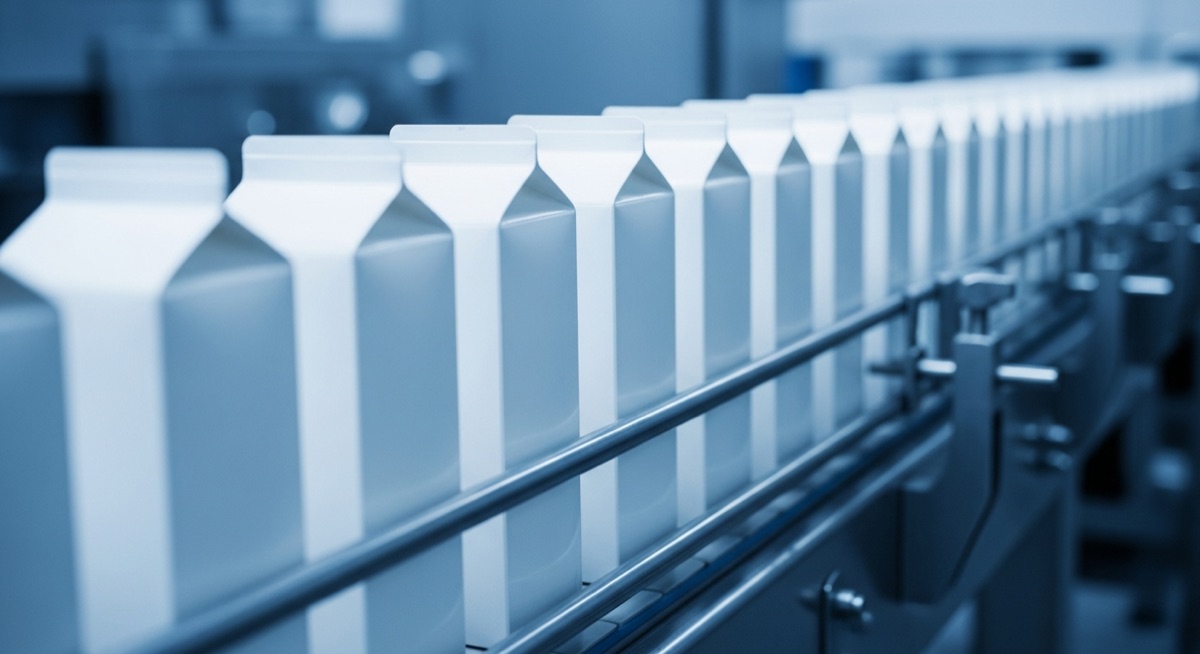
Aseptic packaging is a filling and sealing process in which a commercially sterile product is placed into a commercially sterile container, inside a sterile environment, and then hermetically sealed — without any subsequent heat treatment of the finished package. For dairy producers, this means milk, cream and dairy-based drinks can achieve a shelf life of six to twelve months at ambient temperature, eliminating the need for refrigeration throughout distribution and retail. The aseptic process is the technology behind the long-life UHT milk cartons found across supermarkets in the MENA region and globally.
Defining aseptic packaging
Definition
Aseptic packaging (from the Greek a-septos, "without putrefaction") refers to any system in which a sterilized product and a sterilized container are brought together under sterile conditions so that the sealed unit is free from viable microorganisms. The term covers both the packaging format itself and the filling technology that achieves this condition.
The word "aseptic" distinguishes this approach from conventional hot-fill or retort processes, where the product is placed in a container and the sealed pack is subsequently heat-treated. In aseptic processing, all sterilization steps happen before filling, which allows the use of heat-sensitive packaging materials and minimises thermal damage to flavour, colour and nutritional value.
According to widely established food-technology literature, aseptic processing became commercially viable for dairy products in the second half of the 20th century, and the brick-shaped multilayer carton — now produced in many formats by a range of equipment and material suppliers — remains the dominant format for long-life milk worldwide.
How does aseptic packaging work?
The aseptic process has three distinct stages that must happen in the correct sequence. Understanding each stage is essential for dairy producers evaluating filling lines and packaging materials.
Stage 1 — Sterilizing the product
The liquid dairy product is heated to a very high temperature for a very short time — a process known as ultra-high temperature (UHT) treatment. Typical parameters for milk are 135–150 °C for 2–6 seconds, achieved using either direct steam injection/infusion or an indirect plate or tubular heat exchanger. At these conditions, all vegetative bacteria, yeasts, moulds and, critically, heat-resistant bacterial spores are destroyed. The product is then rapidly cooled, usually to below 25 °C, before it reaches the filling zone.
Stage 2 — Sterilizing the packaging material
The packaging material is sterilized separately, independently of the product. The method depends on the material type:
- Multilayer carton roll stock — the web of laminated paperboard/foil/polyethylene passes through a bath or spray of hydrogen peroxide (H₂O₂), typically at a concentration of 30–35%, followed by hot-air drying to decompose and remove all residual peroxide before the carton is formed and filled.
- Preformed plastic containers (cups, tubs) — sterilized in-line with H₂O₂, UV light, or a combination of both, depending on the machine design and regulatory requirements.
- Plastic bottles (HDPE/PET) — either blown aseptically in a sterile environment on the filling machine, or pre-sterilized before entering the filler.
Stage 3 — Filling in a sterile environment
Once both the product and the packaging are sterile, they must be brought together without any recontamination. The filling machine maintains a continuously sterile environment — typically an enclosed chamber bathed in sterile filtered air (HEPA-filtered) kept at a slight positive pressure to prevent inward airflow. The product fills into the container, the container is sealed with a sterile closure or sealing film, and the finished package exits the sterile zone. At no point after this sealing step does the product need any further heat treatment.
In aseptic packaging, what is sterilized?
A question that comes up frequently in procurement discussions is precisely which elements of the process require sterilization. The short answer: everything that will contact the product after sterilization must itself be sterile.
| Element | Sterilization method | Timing |
|---|---|---|
| Liquid dairy product | UHT heat treatment (135–150 °C / 2–6 s) | Before entering filler |
| Packaging material (carton, film, cup) | H₂O₂ spray/bath + hot-air drying; or H₂O₂ + UV | In-line, immediately before forming/filling |
| Closures, straws, caps | H₂O₂ or electron beam (depending on format) | Before application to package |
| Filling machine interior & product contact surfaces | Sterilisation-in-place (SIP) with steam or hot water before production run | Start of each production run; maintained continuously |
| Filling atmosphere | HEPA-filtered positive-pressure sterile air | Continuous during production |
Aseptic packaging vs. pasteurization — what is the difference?
Pasteurization and aseptic (UHT) processing are both thermal treatments for dairy products, but they serve different purposes and result in very different packaging and distribution requirements.
| Property | Pasteurization | Aseptic / UHT |
|---|---|---|
| Heat treatment | ~72 °C for 15 s (HTST) or ~63 °C for 30 min (LTLT) | 135–150 °C for 2–6 s (UHT) |
| Microbial result | Reduction of pathogens; some spores survive | Commercial sterility; spores destroyed |
| Packaging requirement | Clean (not sterile) container; refrigerated distribution | Sterile container; aseptic fill |
| Typical shelf life | 7–21 days under refrigeration | 6–12+ months at ambient temperature |
| Cold-chain dependency | Required throughout | Not required for storage or distribution |
| Flavour impact | Minimal flavour change | Slight "cooked" note; minimised with direct UHT |
For dairy producers serving markets where cold-chain infrastructure is expensive or unreliable — a common situation across much of the MENA region — the ability to distribute without refrigeration is a decisive commercial advantage of the aseptic route.
Types of aseptic packaging for dairy
Several distinct packaging formats can be used for aseptic dairy products. Each has different cost profiles, production equipment requirements and consumer acceptance characteristics.
Aseptic carton packaging
The most widely used format globally for long-life milk. An aseptic carton is a multilayer laminate combining paperboard (for structural rigidity), low-density polyethylene (for moisture barrier and heat-sealing), and a thin aluminium foil layer (for oxygen and light barrier). The carton material is supplied as a roll or in pre-cut blanks to the filling machine, where it is sterilized in-line, formed into the carton shape, filled, and sealed — all in a single continuous process. Common shapes include brick (parallelepiped), gable-top, and wedge. Sizes range from 100 ml portion packs to 2-litre family formats.
Aseptic plastic bottles
HDPE and PET bottles are used for both consumer and bulk dairy packaging. In modern aseptic bottle fillers, the bottle is either blow-moulded in a sterile environment immediately before filling, or pre-formed bottles are sterilized before entering the aseptic filling zone. Plastic bottles are often preferred where carton equipment capital costs are a constraint, or where a specific bottle shape is required for branding.
Aseptic pouches and flexible films
Flexible multilayer films — typically polyethylene/aluminium foil/polyethylene or similar barrier laminates — are used for both retail and bulk aseptic dairy products. Retail pouches (200 ml "pillow packs") are popular in several MENA and South Asian markets as a low-cost, lightweight format. Bulk aseptic bag-in-box formats (5–1,000 litres) are used for industrial dairy ingredients and concentrates.
Aseptic cups and tubs
Thermoformed or injection-moulded plastic cups, sealed with aluminium foil lids, are used for aseptic filling of cream, coffee creamers, desserts and portion-controlled dairy products. The cups are sterilized in-line, filled aseptically, and the foil lid is also sterilized before sealing.
Why aseptic packaging of milk matters in MENA markets
The MENA region presents a set of conditions that make aseptic UHT milk packaging particularly valuable:
- Climate: Ambient temperatures regularly exceed 35–45 °C in summer months across GCC countries, North Africa and the Levant. Refrigeration costs are high and energy supply can be intermittent in some markets.
- Cold-chain gaps: While cold-chain infrastructure has improved significantly in major cities, last-mile refrigeration at small retail outlets remains inconsistent in many sub-markets. An aseptic product can sit on an unrefrigerated shelf without spoiling.
- Import distances: Many MENA countries import a significant share of their dairy supply from Europe, Oceania or South America. Transit times of three to eight weeks by sea are only commercially viable for aseptic products.
- Consumer preference: UHT milk has, over decades, become the norm for most households in many MENA markets. Consumer familiarity and trust in the format is high.
- Local production growth: Several MENA countries are investing in domestic dairy processing capacity. This is driving demand for both aseptic filling lines and the packaging materials — cartons, cups, films and closures — that those lines consume.
According to internal market data compiled by NISSA INTERNATIONAL across our sourcing engagements, the proportion of liquid dairy products packaged in aseptic formats is substantially higher in the GCC and North Africa than in Western European markets, where chilled distribution infrastructure is more developed.
How to source aseptic packaging and filling lines — NISSA's perspective
For a dairy producer looking to adopt or expand aseptic packaging, the sourcing process involves two parallel workstreams: packaging materials (carton roll stock, films, cups, closures) and processing and filling equipment (UHT units, aseptic fillers, CIP/SIP systems). These must be technically compatible — not all packaging materials work with all filling equipment, and some material suppliers and equipment manufacturers operate in closely linked ecosystems.
Key questions to resolve early in the sourcing process include:
- Format and capacity: What pack size, shape and daily/annual volume are you targeting? This determines the class of filling machine and the minimum order quantities for packaging materials.
- Material compatibility: Is the carton roll stock, film or cup specification compatible with your target filling line? Material gauge, laminate structure, sealing parameters and barrier performance all need to be matched to the machine.
- Qualification and approval: What food-safety and regulatory standards apply in your target market (e.g. Gulf Standards Organization, Egyptian Standards, EU import requirements)? Packaging materials and processes need to meet these before commercial production.
- Total cost of ownership: Equipment capital cost, installation and commissioning, spare parts sourcing, and ongoing packaging material unit costs all form part of the decision. A lower-cost filling line may carry a higher material cost dependency.
- Supplier reliability and lead times: For a continuous production operation, consistent supply of packaging materials at the right specification is critical. Supply-chain resilience — including second-source qualification — is worth planning from the outset.
NISSA INTERNATIONAL works with dairy producers across these decisions — from initial market studies and supplier identification through to qualification, negotiation support and ongoing procurement. Our network covers both packaging material suppliers and processing equipment manufacturers, which allows us to assess compatibility across both workstreams simultaneously. See our fields of expertise or contact our team to discuss your specific project.
For further reading, see our articles on how to source a UHT filling line and a detailed comparison of UHT vs. fresh milk packaging formats for different MENA market contexts.
Aseptic Packaging — Common Questions
Aseptic packaging works by sterilizing the product (typically with high-temperature short-time heat treatment) and the packaging material separately, then combining them inside a continuously sterile filling environment. Because neither the product nor the container carries any viable microorganisms when they are joined, the sealed package remains shelf-stable without refrigeration for months.
Both the product and the packaging material are sterilized independently. The liquid product is sterilized by heat (usually UHT — ultra-high temperature at 135–150 °C for 2–6 seconds) and then cooled rapidly. The packaging material — carton board, plastic film, foil, or preformed containers — is sterilized separately using hydrogen peroxide (H₂O₂) or a combination of heat and UV light, depending on the material type. The filling machine interior and all product-contact surfaces are also sterilized before each production run.
Pasteurization heats the product to a lower temperature (typically 72 °C for 15 seconds for milk) to reduce pathogen load, but it does not achieve commercial sterility. The product still requires refrigeration and has a shelf life of days to a few weeks. Aseptic processing uses higher temperatures for shorter times (UHT), achieves commercial sterility, and when filled aseptically produces a product shelf-stable at ambient temperature for six months to over a year.
The main types are: (1) multilayer aseptic cartons — a laminate of paperboard, polyethylene and aluminium foil, supplied in roll or pre-cut form for brick, gable-top or wedge shapes; (2) aseptic plastic bottles — blow-moulded HDPE or PET bottles sterilized before filling; (3) aseptic pouches — flexible multilayer films used for bulk and retail dairy; (4) aseptic cups and tubs — thermoformed plastic containers sealed with foil lids, common for portions and yoghurt-style products.
The MENA region has high ambient temperatures and, in many areas, limited or unreliable cold-chain infrastructure. Aseptic UHT milk and dairy products can be stored and distributed at room temperature for six to twelve months, dramatically reducing refrigeration costs and spoilage losses. This makes aseptic packaging the preferred format for long-life milk, flavoured milk, cream and dairy-based drinks across the region.
Aseptic carton packaging is a multilayer carton format — typically paperboard bonded with polyethylene and an aluminium foil barrier layer — designed for aseptic filling of liquid dairy and food products. The carton material arrives at the filling line in roll or pre-cut form and is sterilized in-line before the product is filled and the carton is sealed, all within a sterile environment. Brick-shaped aseptic cartons are one of the most widely used formats globally for UHT milk.
Talk to NISSA about sourcing your dairy packaging
Whether you are evaluating aseptic cartons, cups, flexible films or a complete filling and processing line, our team can help you identify the right suppliers, assess technical compatibility and manage the procurement process.
Get in touch with our team