
UHT vs Fresh Milk Packaging: Shelf Life, Cold Chain & Cost
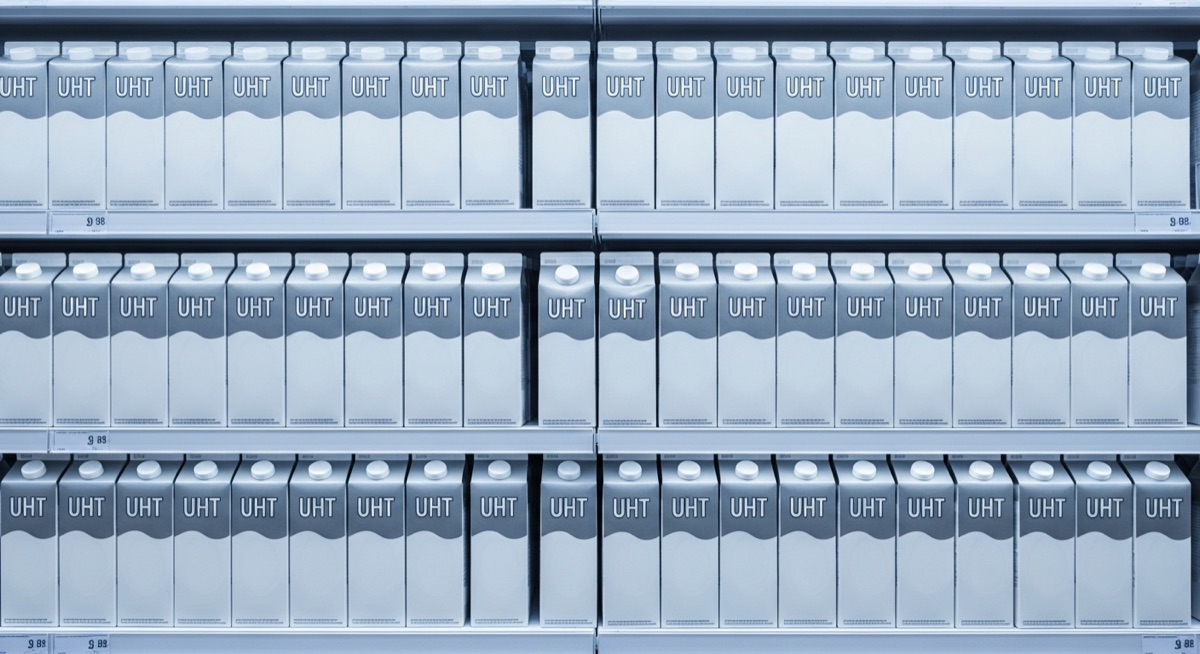
UHT milk packaging and fresh milk packaging differ fundamentally in the heat treatment applied to the product, the sterility requirements of the packaging, and the resulting shelf life and cold-chain dependency. UHT (ultra-high temperature) processed milk is filled aseptically into sealed multilayer cartons, pouches or bottles and achieves 6 to 12 months of shelf life at ambient temperature without refrigeration. Fresh pasteurized milk is filled into clean (non-sterile) containers — typically HDPE bottles or gable-top cartons — under refrigeration, and has a shelf life of 7 to 21 days. For dairy producers evaluating which route to take, the choice hinges on distribution infrastructure, target markets, cost structure and consumer expectations.
What is UHT milk packaging?
Definition
UHT milk packaging refers to any packaging format used to contain milk that has been ultra-high temperature (UHT) processed — heated to 135–150 °C for 2–6 seconds to destroy all vegetative microorganisms and heat-resistant spores — and subsequently filled under aseptic conditions. The package itself must provide an effective barrier against oxygen, light and microbial ingress to preserve the product's commercial sterility throughout its shelf life.
The UHT process achieves what food technologists call commercial sterility — a condition in which no viable pathogenic or spoilage microorganisms are present in quantities that would cause concern under normal storage conditions. Because both the product and the packaging material are sterilized before they come together in a sealed aseptic environment, the resulting pack needs no refrigeration for distribution or retail display.
According to established food science literature, the combination of the UHT process with aseptic packaging transformed global dairy supply chains from the 1960s onwards, enabling long-distance trade and access to markets with limited cold infrastructure. Today, UHT aseptic cartons — brick-shaped multilayer laminates of paperboard, polyethylene and aluminium foil — are the dominant format for long-life milk across the MENA region, continental Europe and large parts of Asia and Latin America.
What is fresh milk packaging?
Fresh milk — in commercial dairy terminology — refers to pasteurized (and sometimes further extended-life pasteurized) milk that has undergone a lower-temperature heat treatment insufficient to achieve commercial sterility. The product requires refrigeration from processing through to consumption.
The most common pasteurization standard for fresh milk is HTST (high-temperature short-time) processing at approximately 72 °C for 15 seconds. This eliminates pathogens and substantially reduces the spoilage microorganism load, but allows heat-resistant bacterial spores to survive. Once the product cools and is packaged, it will spoil if not kept cold.
Packaging formats for fresh milk must be clean and food-safe, but they do not need to meet the full sterility requirements of aseptic formats. Commonly used formats include:
- HDPE bottles — the most common format for fresh milk in many markets; translucent or opaque, easy to blow-mould locally, relatively low unit cost.
- Gable-top cartons — a paperboard/polyethylene laminate filled on a non-aseptic carton line; widely used in Europe and North America for fresh milk.
- PET bottles — used in some markets where visual clarity and recyclability are priorities.
- Flexible pouches — a low-cost option used in some South Asian and North African markets for fresh milk sold in small volumes.
For a broader comparison of milk packaging formats across cartons, bottles, pouches and glass, see our article on best packaging for milk.
UHT vs fresh milk packaging — direct comparison
The table below summarises the key differences between UHT aseptic packaging and fresh milk packaging across the dimensions most relevant to dairy producers and procurement teams.
| Parameter | UHT Milk Packaging (aseptic) | Fresh / Pasteurized Milk Packaging |
|---|---|---|
| Heat treatment of product | 135–150 °C / 2–6 s (UHT) | ~72 °C / 15 s (HTST pasteurization) |
| Microbial result | Commercial sterility — all spores destroyed | Pathogen reduction — heat-resistant spores survive |
| Packaging sterility requirement | Must be sterilized aseptically (H₂O₂ or UV); filled in sterile environment | Clean, food-grade; no sterilization required |
| Primary packaging formats | Multilayer aseptic carton (brick/gable/wedge), aseptic HDPE/PET bottle, aseptic pouch | HDPE bottle, gable-top carton, PET bottle, flexible pouch |
| Shelf life (unopened) | 6–12 months at ambient temperature | 7–21 days under continuous refrigeration (2–4 °C) |
| Cold-chain requirement | Not required for storage or distribution (ambient) | Required throughout: processing → storage → distribution → retail |
| Filling equipment type | Aseptic filler (high capital cost; H₂O₂ sterilization system; SIP/CIP integrated) | Conventional filling line (lower capital cost; simpler CIP) |
| Packaging material cost | Higher per unit (multilayer laminate with foil barrier) | Lower per unit (HDPE bottle or simple carton laminate) |
| Cold-chain infrastructure cost | None for distribution; refrigeration needed only post-opening | Significant: refrigerated storage, transport, retail cabinets throughout |
| Flavour characteristics | Slight "cooked" note (minimised with direct UHT and short holding time) | Fresher, closer to raw milk taste |
| Nutritional impact | Marginal reduction in heat-sensitive vitamins (B1, B12); protein and calcium unaffected | Minimal impact on nutritional profile at pasteurization temperatures |
| Typical application in MENA | Dominant format — GCC, North Africa, Levant | Premium/local segment; cities with developed cold chains |
Shelf life: the decisive practical difference
The shelf life gap between UHT aseptic and fresh pasteurized milk is the most commercially significant difference for distribution planning. A UHT carton produced in Europe or Oceania can be shipped by sea to a MENA port, cleared through customs, warehoused at ambient temperature, distributed to a retailer and still have months of remaining shelf life on the shelf. The same journey is not feasible for fresh pasteurized milk.
For locally produced milk, the shelf life difference determines the geographic radius a dairy plant can supply. A fresh milk plant must deliver to retailers within hours to days by refrigerated vehicle. A UHT plant can supply a national or even regional market from a single production site, reducing logistics cost and complexity.
Extended shelf life (ESL) milk — the middle ground
Between standard HTST pasteurized milk (7–10 days) and UHT milk (6–12 months) lies a category called extended shelf life (ESL) milk. ESL products typically achieve 21–45 days of refrigerated shelf life through a combination of microfiltration (to remove spores), higher pasteurization temperatures, improved packaging hygiene, and sometimes mild aseptic techniques. ESL is a growing format in markets where consumers prefer fresher-tasting milk but the retailer or distributor needs a longer working window. ESL filling lines represent an intermediate capital investment between conventional and full aseptic lines.
Cold-chain cost and infrastructure
Cold-chain dependency is the most consequential operational difference between the two routes, particularly in MENA markets.
A refrigerated supply chain for fresh milk requires:
- Refrigerated storage at the dairy plant (2–4 °C)
- Refrigerated transport vehicles throughout distribution
- Refrigerated warehousing at distribution centres
- Refrigerated display cabinets at all retail points
- Reliable electricity supply at each point — costly in markets with high ambient temperatures
In GCC markets, where summer ambient temperatures regularly exceed 45 °C, the energy cost of maintaining refrigeration throughout the chain is substantial. In North Africa and the Levant, cold-chain reliability outside major cities can be inconsistent, and last-mile refrigeration at small grocery outlets is often absent.
UHT aseptic milk eliminates the cold-chain requirement for all stages prior to opening. Warehousing and retail display can be at ambient temperature, and distribution does not require refrigerated vehicles for the primary leg. This structural advantage explains why aseptic UHT milk accounts for the substantial majority of packaged liquid milk sold across the MENA region.
For a detailed explanation of how aseptic processing eliminates the cold-chain requirement, see our article on what is aseptic packaging.
Cost structure: packaging material vs cold-chain trade-off
A common misconception is that UHT packaging is simply "more expensive" than fresh milk packaging. The correct framing is a trade-off between packaging material costs and cold-chain infrastructure costs.
Packaging material cost
Multilayer aseptic cartons — with their aluminium foil barrier layer, multiple polyethylene coatings and food-grade paperboard — cost more per unit than the simple HDPE bottles or single-laminate gable-top cartons used for fresh milk. Aseptic filling line capital costs are also higher than conventional fillers, reflecting the more complex sterilization, SIP/CIP and sterile-environment engineering involved.
Cold-chain cost
Against the higher material cost of aseptic packaging, the UHT route avoids the ongoing capital and energy cost of refrigeration throughout the supply chain. In markets with high electricity costs, extreme climates, or long distribution distances, this offset can be very significant. Internal analysis from NISSA INTERNATIONAL's sourcing engagements across the MENA region consistently shows that, for producers supplying markets beyond their immediate city, the total delivered cost of UHT milk is frequently competitive with fresh milk once cold-chain costs are fully accounted for.
Spoilage and waste
Spoilage rates for fresh milk — particularly in markets with inconsistent cold chains or long distribution distances — can be a material cost factor. UHT milk's 6–12 month shelf life reduces spoilage losses substantially, which offsets part of the higher packaging material cost.
When to choose UHT vs fresh milk packaging
The choice between UHT aseptic and fresh milk packaging is rarely straightforward. The following framework covers the key decision factors.
Choose UHT aseptic packaging if:
- Your target market has high ambient temperatures and limited or costly cold-chain infrastructure.
- You are supplying national or regional distribution with long transport distances.
- You are importing milk or dairy ingredients by sea with transit times of several weeks.
- Your consumers are familiar with and accepting of UHT milk — as is the case across most MENA markets.
- You want to minimise spoilage losses and achieve predictable shelf life for inventory planning.
- You are targeting export markets alongside your domestic market.
Choose fresh milk packaging if:
- You are serving an urban market with reliable cold-chain infrastructure from plant to retail.
- Consumer preference for fresh-tasting milk is strong and commands a price premium in your market.
- Your distribution radius is limited and you can reliably supply retail within 24–48 hours of processing.
- You are targeting a premium or organic segment where "fresh" positioning is commercially valuable.
- Capital constraints make the higher investment in aseptic filling equipment difficult to justify at your scale.
Consider ESL as a hybrid solution if:
You need longer shelf life than standard pasteurization allows (to serve a wider geographic area or reduce delivery frequency) but want the flavour profile and consumer positioning of a fresh product. ESL is a growing segment in Gulf markets where cold chains in major cities are reliable but longer shelf life is commercially useful.
MENA market context
The MENA region's dairy packaging landscape is shaped by a combination of structural and climatic factors that strongly favour UHT aseptic formats:
- Import dependency: Several MENA countries — including those in the GCC — import a significant share of their processed dairy requirements. Sea freight from Europe or Oceania at ambient temperature is only possible for aseptic products.
- Domestic production investment: Countries including Saudi Arabia, UAE, Egypt and Morocco have made substantial investments in domestic dairy processing capacity. New UHT filling lines and aseptic packaging supply contracts form a significant share of NISSA INTERNATIONAL's sourcing mandates in the region.
- Fresh milk premiumisation: In larger cities with well-developed retail cold chains — particularly in the UAE, Saudi Arabia and Egypt — there is a growing premium fresh and ESL milk segment. This is creating parallel demand for conventional and ESL filling equipment alongside existing UHT infrastructure.
- Regulatory alignment: Gulf Cooperation Council (GCC) standards and national standards across MENA markets recognise both UHT and pasteurized milk categories, with specific labelling and shelf-life requirements for each. Procurement teams need to ensure packaging specifications, fill-line qualifications and product labelling comply with the relevant standards for their target market.
According to internal sourcing data compiled across NISSA INTERNATIONAL's engagements, UHT aseptic cartons account for the largest single share of packaged liquid milk consumed across the GCC and North Africa, with fresh and ESL formats concentrated in premium urban retail channels.
UHT vs Fresh Milk Packaging — Common Questions
UHT milk is heat-treated at 135–150 °C for 2–6 seconds to achieve commercial sterility, then filled aseptically into sealed multilayer cartons, pouches or bottles — giving a shelf life of 6 to 12 months at ambient temperature without refrigeration. Fresh (pasteurized) milk is heat-treated at lower temperatures (typically 72 °C for 15 seconds), filled into clean but non-sterile containers such as HDPE bottles or gable-top cartons, and requires continuous refrigeration with a shelf life of 7 to 21 days.
UHT milk is packaged in aseptic formats that provide an effective barrier against oxygen, light and microorganisms. The dominant format globally is the multilayer aseptic carton — a laminate of paperboard, polyethylene and aluminium foil — in brick, gable-top or wedge shapes. Aseptic HDPE and PET bottles, flexible multilayer pouches and aseptic bag-in-box formats are also used depending on market, volume and cost requirements.
On a per-unit packaging material basis, UHT aseptic packaging (particularly multilayer cartons) typically carries a higher material cost than the HDPE bottles or simple cartons used for pasteurized milk. However, the total cost comparison must include cold-chain infrastructure: UHT products eliminate refrigeration costs throughout storage and distribution, which can be substantial in markets with high energy costs or limited cold-chain infrastructure, such as much of the MENA region.
UHT milk in aseptic packaging has a typical shelf life of 6 to 12 months at ambient temperature (unopened). Fresh pasteurized milk, kept under continuous refrigeration at 2–4 °C, typically has a shelf life of 7 to 21 days depending on the pasteurization method and packaging format.
Several structural factors favour UHT milk in the MENA region: ambient temperatures regularly exceed 40 °C, making cold-chain maintenance costly and complex; many markets import a significant proportion of dairy supply with transit times of weeks; last-mile cold-chain reliability is inconsistent outside major cities; and consumer familiarity with UHT milk is high after decades of market presence. Aseptic UHT packaging is therefore the practical and commercially dominant format across the GCC, North Africa and the Levant.
Aseptic cartons are specifically designed for aseptically processed (UHT) products. Fresh pasteurized milk is not filled on aseptic lines — it uses conventional filling equipment that fills into clean but non-sterile containers under refrigerated conditions. Gable-top cartons are commonly used for both fresh milk (non-aseptic filling, chilled distribution) and UHT milk (aseptic filling, ambient distribution), but the filling process, machine type and laminate structure differ between the two applications.
Talk to NISSA about your dairy packaging strategy
Whether you are evaluating UHT aseptic filling lines, fresh milk packaging equipment or ESL solutions, our team can help you identify the right suppliers, assess technical compatibility and manage the procurement process across the MENA region.
Get in touch with our team