How to Source a UHT Filling Line: A Dairy Producer's Checklist
Sourcing a UHT filling line is one of the highest-stakes capital decisions a dairy producer will make. The right line determines your pack format, your packaging material supplier options, your regulatory qualification timeline and your cost per pack for the next ten to fifteen years. This checklist walks through the five critical decision areas — capacity, material compatibility, qualification, total cost of ownership (TCO) and supplier reliability — so that dairy producers and procurement teams can enter the market with a structured, risk-managed approach.
Why a structured sourcing process matters
Definition
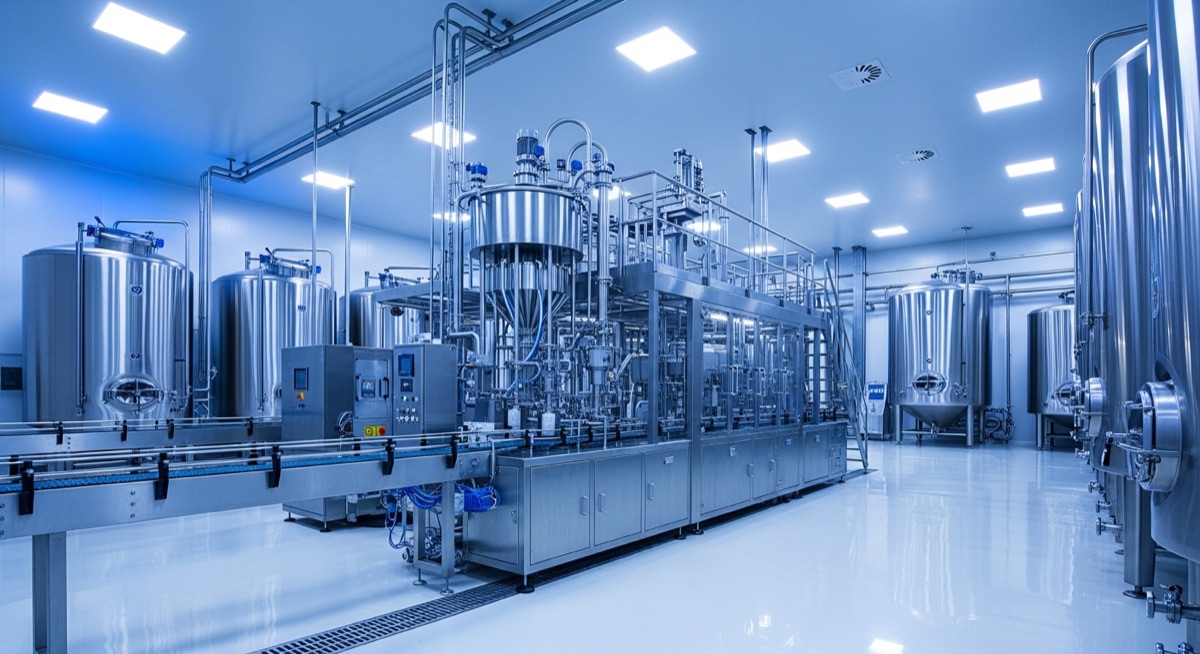
A UHT filling line is an integrated production system that combines ultra-high temperature (UHT) heat treatment of liquid dairy products with aseptic filling into sterile packaging — cartons, bottles, pouches or cups — within a continuously maintained sterile environment. The system typically includes the UHT unit, the aseptic surge tank, the filling machine itself, and the downstream conveyance and secondary packaging equipment.
According to equipment sourcing data compiled through NISSA INTERNATIONAL's procurement consulting engagements across the MENA region, mismatches between filling equipment and packaging material specifications are among the most common — and most costly — errors in dairy capital projects. A machine specified for one carton board laminate may not seal correctly with an alternative supplier's stock, locking the producer into a single material source at unfavourable commercial terms.
A structured sourcing process that addresses all five decision areas in sequence reduces this risk, compresses the qualification timeline and creates commercial leverage in supplier negotiations. The checklist below is designed to be used alongside — not as a substitute for — specialist technical and commercial due diligence.
1. Capacity planning
Capacity is the first and most fundamental specification parameter. It drives the class of machine, the footprint of the installation, the utility requirements and the capital cost range. Specifying too little capacity constrains growth; specifying too much ties up capital in idle equipment.
How to calculate required filling capacity
- Start with annual volume: Express your production target in litres or packs per year, broken down by pack size.
- Convert to peak hourly rate: Divide by planned production hours per year. Allow for a realistic Overall Equipment Effectiveness (OEE) of 70–85% for a well-run dairy aseptic line — not 100%.
- Add a growth buffer: Most producers add 20–30% to the calculated rate to accommodate volume growth within the line's planned useful life.
- Account for pack-size changeovers: If you run multiple pack sizes on one line, each changeover costs time. Lines with faster changeover capability command a premium but pay back in utilisation.
Filling speeds for aseptic lines are expressed in packs per hour (pph) or litres per hour (lph). A typical mid-range carton filling line operates at 4,000–12,000 pph; high-speed lines reach 24,000 pph or more. Bottle and cup lines have different throughput profiles depending on format.
2. Material compatibility
Every UHT filling line is engineered around a specific set of packaging material parameters. These are not interchangeable. Before committing to equipment, verify compatibility with your intended packaging material — ideally with the same roll stock, blank or preformed container you intend to purchase commercially.
Key compatibility parameters to verify
- Laminate structure and thickness: Carton board weight (g/m²), polyethylene layer gauges, aluminium foil thickness and total caliper must all fall within the machine's specified tolerance window.
- Sealing parameters: Temperature, pressure and dwell time for longitudinal and transverse seals. Out-of-spec material may seal poorly at the machine's designed parameters.
- Sterilization chemistry compatibility: Some materials are sensitive to higher concentrations of hydrogen peroxide. Confirm the material is validated for the machine's sterilization system.
- Carton blank geometry (for pre-cut blank systems): Crease patterns, perforation positions and blank dimensions are machine-specific.
- Closure compatibility: If you are adding straw holes, screw caps or pour spouts, confirm that the closure application module on the filling line is compatible with your chosen closure.
For dairy producers in the MENA region, the practical implication is significant: a filling line that is only qualified for a single packaging material supplier's stock limits your commercial leverage. Where possible, negotiate multi-material qualification at commissioning, or confirm the machine's design allows subsequent qualification of alternative materials. For a broader view of available packaging formats, see our article on what is aseptic packaging.
3. Qualification and regulatory compliance
In regulated food production, a filling line cannot simply be switched on and used. It must be formally qualified — and the qualification process has a defined sequence that cannot be compressed beyond certain limits.
Qualification stages
- Design Qualification (DQ): Confirms the specified equipment meets your process and regulatory requirements on paper, before manufacture.
- Factory Acceptance Test (FAT): Conducted at the equipment manufacturer's facility before shipment. Verifies mechanical completeness, electrical safety and, where possible, filling performance.
- Installation Qualification (IQ): Confirms the equipment has been installed correctly at your site, per manufacturer specification.
- Operational Qualification (OQ): Demonstrates the equipment operates consistently within specified parameters across its operating range.
- Performance Qualification (PQ) / Process Validation: Demonstrates the complete system — UHT unit, filler, packaging material, cleaning and sterilisation protocols — produces commercially sterile product consistently over multiple production runs. This stage typically includes microbiological challenge testing.
According to standard food industry timelines, the full qualification cycle from equipment order to validated commercial production takes 12 to 24 months for a new aseptic filling installation. Regulatory requirements vary by market: Gulf Standardisation Organisation (GSO) requirements, Egyptian food safety standards and EU import requirements each add specific documentation obligations that must be planned into the project schedule.
4. Total cost of ownership (TCO)
The purchase price of a UHT filling line is rarely the largest cost over its useful life. TCO analysis — projecting all costs over a ten-year horizon — consistently shows that packaging material cost dwarfs equipment capital cost for high-volume operations.
| Cost element | Typical share of 10-year TCO | Notes |
|---|---|---|
| Equipment purchase & installation | 15–25% | Higher share for lower-volume operations |
| Packaging materials (cartons, films, cups, closures) | 40–55% | Largest single element; negotiate long-term supply contracts |
| Energy and utilities (steam, compressed air, chilled water) | 8–14% | Highly sensitive to local energy tariffs |
| Maintenance, spare parts and consumables | 10–16% | Proximity of manufacturer service network matters |
| Labour (operators, QA, engineering) | 8–15% | Automation level of line affects this significantly |
| Financing costs | 3–8% | Applies where equipment is debt-funded |
The practical implication for procurement: the choice of filling equipment should not be made independently of the packaging material supply contract. A line that ties you to a single material source at above-market prices can erode the value of an apparently competitive equipment price. Evaluate TCO across a realistic volume scenario before committing to either side of the decision. For context on the broader MENA dairy packaging market and its cost dynamics, see our MENA dairy packaging market guide.
5. Supplier reliability and after-sales support
A filling line that stands idle because a critical spare part is unavailable, or because service engineers cannot reach your site quickly, has a real cost that does not appear in the equipment purchase price. Supplier reliability is therefore a procurement criterion, not an afterthought.
Supplier assessment checklist
- Reference installations: How many lines of the same model are operating in your region? Request references and visit at least one operating site.
- Local service presence: Does the manufacturer have a regional service office or trained local partners in your country? What is the guaranteed response time for emergency service calls?
- Spare parts availability: What is the recommended initial spare parts package? Are critical wear parts available ex-stock in the region, or do they require 6–8 week lead times from Europe or Asia?
- Training programme: What operator and maintenance training is included in the supply contract? Is ongoing training available for new staff?
- Software and controls: Are PLC software and HMI systems proprietary or based on standard platforms? Proprietary systems can create long-term dependency for upgrades and fault-finding.
- Financial stability: Confirm the manufacturer's business continuity. An equipment supplier that exits the market creates long-term parts and support risk for a machine with a 15-year asset life.
Decision criteria summary
The table below consolidates the five sourcing dimensions into a structured evaluation framework. Use it to score and compare shortlisted filling line suppliers.
| Criterion | What to assess | Red flags |
|---|---|---|
| Capacity fit | Filling speed matches peak demand + 20–30% buffer; OEE benchmarks from reference sites | Manufacturer quotes theoretical max speed with no OEE adjustment |
| Material compatibility | Validated with at least two independent material suppliers; multi-material qualification possible | Machine qualified for only one proprietary packaging material source |
| Qualification support | FAT/IQ/OQ/PQ documentation provided; manufacturer supports regulatory submissions | No structured qualification programme; producer responsible for all validation documentation |
| TCO competitiveness | Packaging material pricing benchmarked independently; energy consumption verified vs. reference sites | TCO analysis provided only by the equipment manufacturer; no independent verification |
| After-sales reliability | Regional service office; spare parts ex-stock; strong reference installation base in region | No regional presence; long lead times for critical spares; few or no regional references |
How NISSA INTERNATIONAL supports the sourcing process
NISSA INTERNATIONAL provides dairy packaging machine procurement consulting across the MENA region, with over 20 years of verified supplier relationships covering both filling and processing equipment manufacturers and packaging material suppliers.
Our role in a UHT filling line sourcing project typically covers:
- Supplier landscape mapping: Identifying all viable filling line options for your format, capacity and budget, including suppliers not represented locally in your market.
- Technical specification review: Checking that the proposed equipment specification matches your product range, packaging material strategy and future capacity requirements before any commercial commitment is made.
- Reference site visits: Coordinating factory visits and reference installation tours so your team can evaluate equipment performance under real operating conditions.
- Commercial negotiation support: Benchmarking equipment prices and packaging material supply terms against comparable projects, and supporting structured commercial negotiation.
- Qualification project management: Coordinating FAT, SAT and process validation activities across the equipment manufacturer, packaging material supplier and your internal quality and operations teams.
If you are planning a new UHT filling line investment — whether a greenfield installation or a capacity expansion — we are available to discuss your project confidentially. See also our overview of aseptic packaging technology and our guide to the MENA dairy packaging market for broader context on the equipment and material landscape.
Frequently Asked Questions
The capital cost of a UHT filling line varies significantly depending on capacity, format (carton, bottle, pouch, cup), level of automation and the manufacturer. Entry-level lines for smaller capacities can start below one million euros, while high-speed carton filling systems for large-scale dairy operations can exceed five to ten million euros. Total cost of ownership — including installation, commissioning, spare parts and packaging material contracts — typically exceeds the equipment purchase price over a five-year horizon.
Required capacity depends on your annual production volume, target pack sizes, planned shift pattern and acceptable downtime. A common starting point is to calculate your peak daily volume, add a 20–30% buffer for planned maintenance and line changeovers, and then match this to filling speeds expressed in packs per hour. Equipment manufacturers and independent consultants can help model the right line configuration for your specific product mix.
No. Each filling line is engineered for specific packaging formats — carton roll stock, preformed cups, bottles or flexible pouches — and within each format, material specifications such as laminate thickness, barrier layer, sealing parameters and carton blank dimensions must match the machine. Mixing incompatible materials and equipment can result in seal failures, sterility breaches and costly downtime. Material compatibility must be verified during the sourcing process, ideally with factory acceptance tests using your specific packaging material.
Qualification of a new UHT filling line typically covers Factory Acceptance Testing (FAT) at the manufacturer's site, Site Acceptance Testing (SAT) after installation, and a process validation period including microbiological challenge testing. The full cycle from order placement to validated production commonly takes 12 to 24 months, depending on equipment complexity, site readiness and the regulatory requirements of your target market.
Total cost of ownership (TCO) for a UHT filling line includes: (1) capital expenditure — equipment purchase price, freight, installation and commissioning; (2) packaging material cost — the ongoing cost per thousand packs of cartons, films, cups or closures; (3) energy and utilities; (4) maintenance and spare parts; (5) operator labour; and (6) financing costs if the equipment is debt-funded. Packaging material cost is often the largest component over the equipment's lifetime and should be negotiated alongside the equipment decision.
A dairy packaging machine procurement consultant adds value by mapping the available supplier landscape, identifying equipment options matched to your specific format and capacity requirements, coordinating technical due diligence and factory visits, supporting commercial negotiation, and managing the qualification timeline. For producers entering the MENA market or scaling existing operations, a consultant with regional supplier relationships can compress timelines and reduce the risk of costly specification mismatches.
Talk to NISSA about sourcing your UHT filling line
Whether you are specifying a new aseptic filling line, evaluating packaging material compatibility or managing the qualification process, NISSA INTERNATIONAL brings 20+ years of verified supplier relationships across the MENA region to your project.
Get in touch with our team