
Dairy Packaging in the MENA Market: Trends & Sourcing Guide 2026
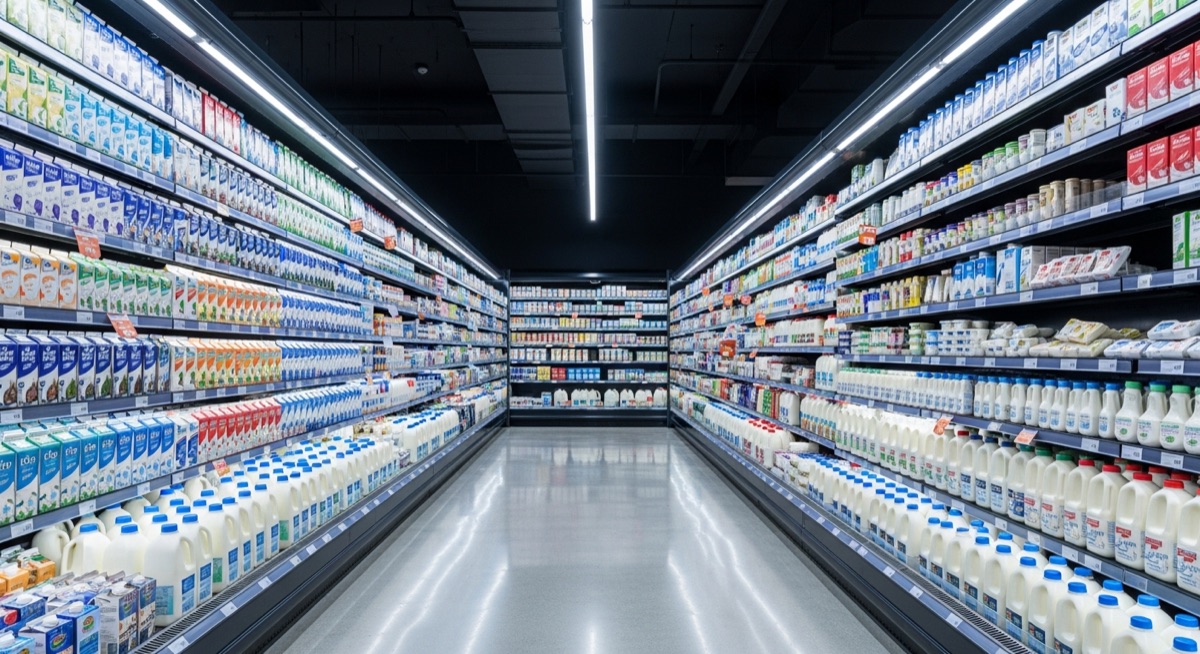
The MENA dairy packaging market is one of the fastest-growing segments of the regional food and beverage industry, driven by population growth, expanding local dairy production capacity, government food-security investment, and persistent structural preference for ambient aseptic formats in markets with limited cold-chain infrastructure. Understanding which formats lead in each sub-market, why they lead, and how to source them effectively is essential knowledge for any dairy producer or procurement team operating in the region. This guide covers the key market drivers, dominant packaging formats, local production dynamics, and practical sourcing considerations for 2026.
Market overview: why MENA dairy packaging is growing
Definition
The MENA dairy packaging market encompasses all primary packaging materials and formats used for liquid milk, yoghurt, cream, labneh, cheese and dairy-based drinks produced for or consumed within the Middle East and North Africa region — covering the six GCC states, Egypt, Morocco, Algeria, Tunisia, Libya, Jordan, Lebanon, Iraq and adjacent markets.
Several structural factors combine to sustain above-average growth in this market relative to more mature regions:
- Demographics: The MENA region has one of the youngest and fastest-growing populations globally. Higher birth rates, increasing urbanisation and a growing middle class all translate directly into rising demand for packaged dairy products.
- Food security policy: GCC governments — particularly in Saudi Arabia and the UAE — have made significant state-backed investments in domestic dairy production capacity as part of food security strategies. This creates direct demand for both packaging materials and filling equipment.
- Organised retail expansion: The growth of hypermarkets, supermarket chains and e-commerce grocery across the region has shifted purchasing toward branded, packaged dairy products and away from loose or unpackaged formats.
- Climate and cold-chain limitations: Ambient temperatures in the GCC routinely exceed 40 °C in summer. The cost of maintaining a continuous cold chain is high, and reliability varies significantly outside major cities. This sustains strong structural preference for aseptic ambient formats.
- Import dependency: A significant portion of dairy consumed across MENA is imported — from Europe, Oceania and South America — at transit times that are only commercially viable in aseptic formats.
According to sourcing data compiled by NISSA INTERNATIONAL across our engagements in the region, demand for aseptic carton materials, cups, foil laminates and filling line components has grown consistently across all major MENA markets over the past three years, with GCC countries leading in volume and North Africa showing the strongest growth trajectory.
Dominant packaging formats and their market position
The MENA dairy market is not a single homogeneous market — format preferences vary significantly between GCC countries, the Levant, and North Africa, reflecting differences in cold-chain maturity, income levels, consumer habits and local production capabilities. The table below summarises the primary formats and their dominant applications.
| Packaging format | Primary dairy application | Key MENA markets | Distribution temperature |
|---|---|---|---|
| Aseptic multilayer carton (brick / gable-top) | UHT long-life milk, flavoured milk, cream | All MENA — dominant in GCC, Egypt, North Africa | Ambient |
| Plastic cup / thermoformed tub | Yoghurt, labneh, fresh cream, desserts | GCC, Levant, Egypt, North Africa | Chilled (2–6 °C) |
| HDPE bottle (pasteurised) | Fresh pasteurised milk, laban (drinking yoghurt) | UAE, Saudi Arabia, Egypt (strong cold chain) | Chilled (2–6 °C) |
| Flexible pouch (multilayer film) | UHT milk (retail), bulk dairy ingredients | Egypt, Morocco, lower-income segments | Ambient (aseptic) or chilled |
| Glass bottle | Premium fresh milk, artisan dairy | UAE, KSA premium segment | Chilled |
| Aseptic bag-in-box (bulk) | Dairy concentrates, cream for hospitality | GCC hospitality & foodservice | Ambient |
Aseptic cartons: the regional leader
The aseptic multilayer carton — a laminate of paperboard, polyethylene and aluminium foil — is the single most important format for liquid dairy in the MENA region. It dominates because it addresses the region's two most significant distribution challenges simultaneously: high ambient temperatures and unreliable cold-chain infrastructure. UHT milk in an aseptic carton can remain safe and palatable at room temperature for six to twelve months, making it viable for both last-mile distribution in remote markets and large-format retail stocking. For a more detailed treatment of how this format works, see our article on UHT vs. fresh milk packaging.
Plastic cups and tubs: the yoghurt segment
For fresh dairy categories — yoghurt, labneh, fresh cream and desserts — thermoformed plastic cups sealed with aluminium foil lids are the established standard across virtually all MENA markets. This segment is growing as per-capita yoghurt consumption increases, particularly in the GCC, driven by health-positioning of yoghurt and labneh in consumer marketing. Cup material is predominantly polypropylene (PP) or polystyrene (PS), with PP gaining share due to better compatibility with future recyclability requirements.
HDPE bottles: fresh milk in strong cold-chain markets
In markets where cold-chain infrastructure is reliable and consumers have access to chilled retail — particularly in the UAE, Saudi Arabia and Egypt's larger cities — HDPE bottles for fresh pasteurised milk represent a meaningful and growing segment. The format appeals to consumers seeking a "fresh" product perception, and supports higher price points in premium positioning. The trade-off is full cold-chain dependency and a shelf life of 7–21 days.
Key market drivers in detail
Three forces are reshaping the MENA dairy packaging market more rapidly than in any previous period:
Local production investment
Government food-security mandates are driving a wave of investment in domestic dairy processing plants across the GCC. Saudi Arabia, the UAE and Qatar have all announced or commissioned new dairy production facilities in the past three years. Each new processing plant creates immediate, ongoing demand for packaging materials — carton roll stock, cup material, foil lidding, closures — and for aseptic filling and processing equipment. This is creating sourcing opportunities for producers that move early to qualify suppliers capable of meeting local regulatory standards (Gulf Standards Organisation, ESMA, and individual national bodies).
Premiumisation and format diversification
Across GCC modern trade, there is a clear trend toward premium and differentiated dairy products: organic milk, A2 milk, probiotic yoghurts, high-protein formats, camel milk and plant-based alternatives. Each of these tends to command higher price points, which in turn supports investment in higher-specification packaging — premium carton shapes, shrink-sleeve labelling, barrier cups with extended shelf life, and glass for the highest tier. This format diversification is creating demand for more flexible filling lines capable of handling multiple SKUs.
Sustainability and lightweighting pressure
While cost remains the dominant consideration in most MENA procurement decisions, sustainability is becoming a meaningful factor for producers supplying international modern trade retailers and export markets. Topics gaining traction include: reduction of polymer weight in carton laminates, recyclability certification for plastic cups and closures, and sourcing of carton board from certified sustainable forestry (FSC/PEFC). Producers should be aware that supplier sustainability credentials are increasingly requested in tenders, even if they are not yet a primary decision driver in most MENA markets.
UAE dairy packaging market: a closer look
The UAE merits specific attention as the most developed and complex dairy packaging market in the GCC. Several characteristics make it distinctive:
- High per-capita consumption: The UAE has among the highest per-capita dairy consumption rates in MENA, supported by a large, high-income expatriate population and well-developed retail infrastructure.
- Multi-format market: Unlike some MENA markets where one or two formats dominate, the UAE supports a genuine multi-format dairy market — aseptic cartons, HDPE bottles, premium glass, plastic cups, bulk bags — reflecting the diversity of its consumer base and retail channels.
- Strong local production: The UAE has significant domestic dairy production capacity, with established producers operating modern aseptic and chilled filling lines. This means packaging suppliers need to meet demanding technical and regulatory standards (ESMA).
- Regional re-export hub: Dubai and Abu Dhabi serve as re-export and distribution hubs for dairy products across the broader MENA region and into East Africa. Packaging specifications must therefore often accommodate multiple destination markets simultaneously.
- Sustainability awareness: UAE-based retailers and foodservice operators are among the most sustainability-aware in the region, driving early adoption of eco-credentials in packaging procurement.
Sourcing dairy packaging for MENA: a practical guide
For dairy producers and procurement teams, sourcing packaging for MENA markets involves a set of considerations that differ from European or North American supply chains. The following framework reflects NISSA INTERNATIONAL's experience across hundreds of sourcing engagements in the region.
Step 1 — Define your format and specification
Format selection should be driven by your distribution channel, cold-chain capability and target consumer, not by packaging supplier convenience. Key decisions: ambient vs. chilled distribution, desired shelf life, pack sizes and shapes, barrier requirements, and language/labelling requirements for target markets. Each of these narrows the field of compatible materials and equipment.
Step 2 — Confirm regulatory requirements
Packaging materials for dairy products sold in MENA must comply with national food-contact material regulations. In the GCC, the Gulf Standards Organisation (GSO) publishes the relevant standards. The UAE's Emirates Authority for Standardisation and Metrology (ESMA) applies additional national requirements. Saudi Arabia (SFDA), Egypt (EOS), Morocco (IMANOR) and other markets each have their own regulatory frameworks. Your packaging supplier must be able to provide compliance documentation for your target market — confirm this before qualification.
Step 3 — Evaluate total cost of ownership
The landed cost of packaging material is only one component of total cost. Equipment capital cost, CIP/SIP chemical consumption, changeover time for multiple SKUs, spare parts lead time (critical for filling lines sourced from Europe or Asia), and waste rates at line startup all contribute to the true cost of the packaging decision. NISSA's sourcing methodology always evaluates TCO, not just unit material price.
Step 4 — Qualify secondary supply
Supply-chain resilience is a consistent weakness in MENA dairy procurement. Single-source dependency on a packaging material supplier — particularly for carton roll stock and specialty foil laminates — creates significant operational risk. We recommend qualifying a secondary supplier for all critical materials before commercial production starts, not as a reactive measure after a supply disruption.
Step 5 — Align equipment and material compatibility
Packaging materials and filling lines are not universally interchangeable. Carton laminate specifications — board weight, PE coating weights, foil gauge, sealing layer properties — must be matched to the filling line's mechanical and sterilisation parameters. When sourcing both materials and equipment in parallel, this compatibility check is essential. For detailed guidance on filling line selection, see our guide on how to source a UHT filling line.
Dairy Packaging MENA — Common Questions
According to multiple industry reports, the MENA dairy packaging market is valued in the multi-billion dollar range and is growing at a compound annual growth rate consistently above the global average, driven by population growth, rising per-capita dairy consumption, expanding local production capacity and investment in cold-chain and aseptic infrastructure across the GCC, North Africa and the Levant.
Aseptic multilayer cartons (brick and gable-top) are the dominant format for long-life UHT milk across the MENA region. Plastic cups and thermoformed tubs are the primary format for yoghurt and fresh dairy. Flexible pouches hold a significant share in lower-income markets and for bulk applications. HDPE bottles are common for fresh pasteurised milk where cold-chain infrastructure is strong, particularly in the UAE, Saudi Arabia and Egypt.
The UAE dairy packaging market is growing because of several converging factors: a large and growing expatriate population with high per-capita dairy consumption, government food-security strategies driving investment in local dairy production, strong retail and hospitality sector demand, and the UAE's role as a regional re-export hub. These factors together sustain demand for a wide range of dairy packaging formats, from aseptic cartons to premium glass bottles and flexible pouches.
The main drivers are: (1) population growth and urbanisation increasing total dairy consumption; (2) government food-security policies encouraging local dairy production across GCC countries; (3) expansion of organised retail that drives demand for branded, well-packaged products; (4) limited cold-chain infrastructure in parts of the region, which sustains strong preference for ambient aseptic formats; and (5) rising consumer interest in premium, sustainable and convenient packaging formats.
Sourcing dairy packaging for the MENA market requires matching the format to the distribution channel and cold-chain capability of the target market, confirming regulatory compliance with the relevant national standards body (e.g. GSO for GCC, ESMA for UAE, EOS for Egypt), evaluating total cost of ownership across material and equipment, and qualifying at least one secondary supplier for supply-chain resilience. Working with a specialist sourcing partner with established MENA supplier relationships significantly reduces risk and lead time.
Yes. Sustainability is becoming a meaningful procurement consideration in the MENA dairy sector, particularly among larger producers supplying modern trade retailers and export markets. Topics gaining traction include lightweighting of carton and plastic formats, recyclability certification, plant-based or recycled content in laminates, and reduced plastic closures. However, the pace of adoption varies considerably by country and market segment, and cost remains the primary decision driver for the majority of MENA producers.
Talk to NISSA about sourcing dairy packaging for MENA
Whether you are entering a new MENA market, expanding production capacity or qualifying a new packaging format, our team brings 20+ years of verified supplier relationships across the region to accelerate your procurement process.
Get in touch with our team