Sustainable & Lightweight Dairy Packaging: Options for Producers
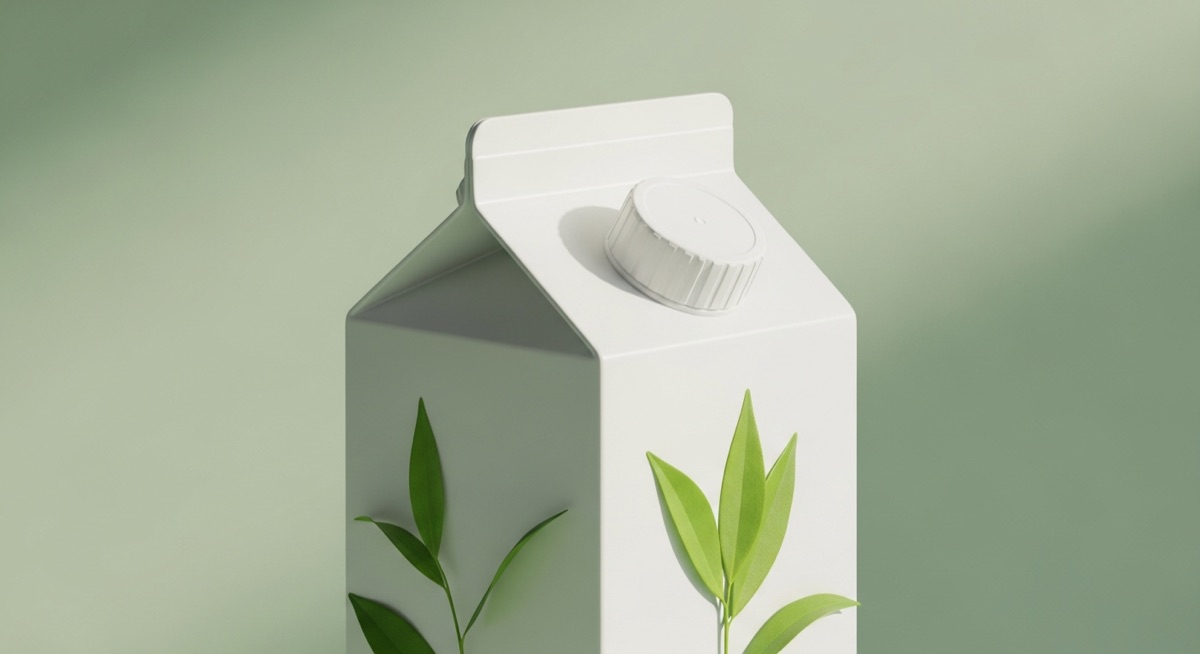
Sustainable milk packaging means choosing formats that reduce material use, carbon emissions and end-of-life waste across the full supply chain — without compromising barrier performance, shelf life or food safety. For dairy producers, the main routes to more sustainable packaging are: switching to lighter-weight formats, increasing recycled or renewable content in existing materials, improving end-of-life recyclability, and reducing total material consumption through design optimisation. Each route involves real engineering and commercial trade-offs that must be evaluated against your production setup, target markets and regulatory environment.
Why sustainable packaging matters for dairy producers
Definition
Dairy packaging lightweighting refers to reducing the mass of a packaging format — by thinning walls, reducing board grammage, or switching to a lower-density material — while maintaining all required functional properties: structural integrity, barrier performance, seal quality and shelf life. Lightweighting is both a sustainability and a cost measure, since less material means lower raw material spend and lower freight cost per unit.
Pressure to improve the sustainability profile of dairy packaging comes from multiple directions simultaneously. Retail and foodservice buyers — particularly those operating across European markets — are attaching sustainability specifications to procurement contracts with increasing frequency. Consumers in GCC and North African markets are gradually becoming more packaging-conscious, particularly among younger urban demographics. And regulatory frameworks, including the EU Packaging and Packaging Waste Regulation and extended producer responsibility (EPR) schemes in various markets, are setting mandatory recycled content and recyclability targets that affect any producer exporting to or importing from regulated markets.
According to packaging industry life-cycle data reviewed by NISSA INTERNATIONAL in the course of sourcing engagements, transport and material production are typically the largest contributors to a dairy package's carbon footprint — which is why lightweighting and format selection have a disproportionate impact on overall environmental performance compared with, for example, switching label materials.
Sustainable packaging formats: options and trade-offs
No single dairy packaging format is "most sustainable" in all contexts. The right choice depends on your product (liquid milk, cream, yoghurt), target shelf life, filling line, distribution market and available end-of-life infrastructure. The table below summarises the principal formats and their key sustainability trade-offs.
| Format | Primary material | Typical weight (1 L) | Recyclability | Renewable content | Key trade-off |
|---|---|---|---|---|---|
| Aseptic multilayer carton | Paperboard + PE + Al foil | 28–32 g | Possible where carton recycling exists; limited in most MENA markets | ~70–75% paperboard (renewable); bio-based PE versions available | Multilayer laminate complicates recycling; excellent ambient shelf life |
| HDPE bottle | High-density polyethylene | 35–55 g | Good — HDPE widely recycled globally | Conventional fossil-based; bio-HDPE available at premium | Heavier than carton or pouch; requires refrigeration (fresh milk) |
| PET bottle | Polyethylene terephthalate | 25–40 g | Good — PET widely recycled; rPET content possible | Up to 100% rPET (recycled) available; bio-PET emerging | Limited oxygen barrier without coating; mainly for fresh or ESL milk |
| Flexible polyethylene pouch | Mono-PE film | 8–12 g | Improving — mono-PE recyclable where PE film streams exist | Bio-based PE available; high post-consumer recycled content harder to achieve | Lowest material weight; requires refrigeration; consumer handling varies |
| Aseptic multilayer pouch | PE/Al/PE laminate | 10–15 g | Limited — foil barrier layer makes recycling difficult | Partial bio-based PE possible | Very low weight; long ambient shelf life; recyclability constrained by foil |
| Glass bottle | Soda-lime glass | 300–500 g | Excellent — infinite recyclability in closed-loop deposit systems | Inorganic (sand-based); high recycled glass content possible | Heaviest format by far; high transport carbon; premium brand positioning |
Lightweighting strategies in practice
Lightweighting is often the most immediately accessible sustainability lever for a dairy producer, because it reduces material cost as well as environmental impact and does not necessarily require a change in packaging format or filling equipment.
Reducing board grammage in cartons
Carton board grammage (measured in grams per square metre, g/m²) can often be reduced within a defined range without changing the carton's external dimensions or the filling line setup. A reduction of 10–15% in board grammage translates directly into an equivalent reduction in material weight and paperboard consumption per unit. The constraint is structural integrity: minimum compression strength, top-load resistance and stacking performance for transit must be verified for the reduced-grammage specification before commercial rollout.
Thinning plastic bottle walls
For HDPE and PET bottles, wall thinning and base geometry redesign can deliver weight reductions of 10–25% compared with previous-generation designs. Modern bottle design tools allow producers and their packaging suppliers to model the effect of wall thickness changes on burst strength, top-load performance and drop resistance before tooling is cut. Any lightweighted bottle must also pass filling line performance tests, since reduced wall rigidity can affect conveying and capping.
Format switching: from bottle to pouch
Where the target market and consumer usage pattern are compatible, switching from a rigid HDPE bottle to a lightweight polyethylene pouch can reduce packaging material weight by 70–80% per litre. Pouches are established as a mainstream format for fresh pasteurised milk in several MENA sub-markets (Egypt, parts of North Africa) and are gaining share elsewhere. The trade-off is consumer convenience: pouches require a jug or scissors to open and are less suited to on-the-go consumption.
Aseptic cartons with bio-based polymers
Several carton material suppliers now offer versions of their standard aseptic carton laminates in which the polyethylene layers are replaced with bio-based polyethylene derived from sugarcane. The carton's external dimensions, laminate structure and filling line behaviour are identical to the conventional version, but the bio-based PE content can account for up to 80% of the plastic in the laminate. This does not change the carton's recyclability, but it reduces dependence on fossil-derived polymers and can support a producer's renewable material sourcing claims.
Recycled content and circular economy considerations
Increasing the recycled content of dairy packaging is a stated goal of many regulatory frameworks and buyer sustainability policies, but its practical application in dairy-specific packaging is constrained by food-safety regulations in most markets.
Recycled PET (rPET)
PET is currently the format where recycled content is most feasible for food-contact dairy applications, because approved food-grade rPET is available in commercial volumes in several geographies and its use in bottles has regulatory precedent in the EU and increasingly in GCC markets. Using rPET reduces the carbon footprint of the bottle material, since producing recycled PET requires significantly less energy than virgin PET. Producers should verify that their chosen rPET supplier holds the relevant food-contact approvals for their target markets.
Post-consumer recycled HDPE
Food-grade post-consumer recycled HDPE (PCR-HDPE) is available but at a meaningful cost premium over virgin resin, and supply is limited compared with demand. It can be used in the outer layers of multi-layer HDPE bottles while keeping a virgin inner layer for food contact, depending on regulatory requirements. As EPR schemes develop in MENA markets, the domestic availability of food-grade recycled HDPE is expected to increase over the coming years.
The recyclability of aseptic cartons
Aseptic cartons contain approximately 75% paperboard fibre by weight, with the remainder comprising polyethylene (15–20%) and aluminium foil (5%). The paperboard fibre is readily recyclable and valuable. However, the separation of the PE and Al layers requires dedicated recycling facilities that are not present in most MENA markets. Producers considering aseptic cartons as a "sustainable" choice for MENA distribution should be realistic about local end-of-life outcomes, and should investigate whether carton collection and recycling programmes exist or are being established in their primary markets.
Sustainable dairy packaging in the MENA context
The sustainability agenda in MENA dairy packaging markets is at an earlier stage than in Western Europe, but it is accelerating, driven by a combination of export market requirements, large-retailer sustainability commitments, and the gradual introduction of regulatory frameworks.
- Export-driven requirements: GCC and North African dairy producers exporting to the EU or supplying multinational retail chains operating in MENA are increasingly required to meet sustainability specifications — recycled content minimums, recyclability requirements, or carbon footprint reporting — as a condition of supply contracts.
- Lightweighting as a cost driver: In markets with high logistics costs, the weight reduction achieved by lightweighting or format switching translates directly to freight savings. This economic logic makes lightweighting an attractive sustainability measure that does not depend on consumer demand or regulatory pressure.
- Infrastructure gaps: The absence of carton recycling infrastructure in most MENA markets limits the practical sustainability benefit of switching to carton formats for the domestic market, even though cartons score well on production carbon footprint due to their lightweight and high renewable content.
- EPR development: Extended producer responsibility schemes are at various stages of development across the region. Saudi Arabia, the UAE and Egypt are the markets furthest advanced in developing packaging waste regulations. Producers should monitor regulatory development in their primary markets and engage with industry associations on EPR design.
For a detailed view of the broader MENA dairy packaging landscape, see our article on dairy packaging in the MENA market: trends and sourcing guide 2026.
Sourcing sustainable dairy packaging: practical steps
For dairy producers ready to move beyond intention and make concrete changes to their packaging's sustainability profile, the following practical steps provide a structured approach.
- Conduct a baseline life-cycle assessment (LCA): Before changing anything, quantify the current environmental footprint of your primary packaging across its full life cycle — from raw material extraction through production, transport and end-of-life. This baseline is the reference point against which any proposed changes should be compared, and it prevents well-intentioned switches that inadvertently increase overall impact.
- Identify your highest-impact lever: For most dairy producers, the biggest single opportunity is either format lightweighting (if you are on a relatively heavy format) or improving end-of-life recyclability (if you are on a multi-material laminate in a market with single-material recycling infrastructure). Prioritise accordingly.
- Assess filling line compatibility: Any packaging change — even a lightweighted version of the same format — must be validated on your filling line before commercial rollout. Changes in board grammage, film thickness, bottle wall dimensions or material stiffness can all affect filling speed, seal integrity and line efficiency.
- Verify supply availability in your region: Bio-based polymers, food-grade rPET and certified sustainable paperboard are not equally available in all markets. Work with a sourcing partner who can map actual supplier availability, lead times and minimum order quantities in your procurement geography before committing to a specification.
- Communicate claims accurately: Sustainability claims on packaging are subject to increasing scrutiny from regulators and buyers. Claims such as "recyclable", "made from renewable materials" or "lower carbon footprint" must be substantiated with verifiable data and qualified where necessary (e.g., "recyclable where facilities exist").
For guidance on choosing between packaging formats more broadly, see our comparison of the best packaging options for milk: carton vs bottle vs pouch vs glass.
NISSA INTERNATIONAL supports dairy producers through packaging specification, supplier identification and qualification, and procurement for both packaging materials and processing equipment. Our team can help you evaluate sustainability options against your specific production setup, market requirements and budget constraints. Contact our team to discuss your packaging project.
Sustainable Dairy Packaging — Common Questions
According to life-cycle assessment studies, aseptic multilayer cartons made with a high proportion of renewable paperboard tend to have a lower carbon footprint per litre of milk delivered than glass or rigid HDPE bottles, largely because of their lighter weight and efficient transport. However, recyclability of the multilayer laminate depends on local sorting and recycling infrastructure. For producers prioritising recyclability, lightweight mono-material polyethylene pouches or fully recyclable PET bottles may perform better in markets where carton recycling is not established.
Dairy packaging lightweighting refers to reducing the weight of a packaging format — typically by thinning the walls of plastic bottles, reducing board grammage in cartons, or switching from a heavier material (glass) to a lighter one (carton or pouch) — while maintaining the required barrier, structural integrity and shelf life. Lightweighting reduces material use, transport weight and associated carbon emissions per unit, and is one of the most cost-effective sustainability levers available to dairy producers.
Aseptic cartons are technically recyclable: the paperboard fibre can be recovered through a pulping and separation process that removes the thin polyethylene and aluminium foil layers. However, this requires dedicated carton recycling facilities. In many MENA markets, carton recycling infrastructure is limited, so in practice the recyclability benefit depends heavily on the producer's target market and available local collection systems.
Plant-based dairy packaging formats include: (1) aseptic cartons with polymer layers made from bio-based polyethylene derived from sugarcane; (2) PLA (polylactic acid) cups and tubs, which are derived from starch and compostable under industrial composting conditions; (3) bio-based barrier films for pouches. Adoption of fully plant-based dairy packaging remains limited by cost, barrier performance requirements for aseptic applications, and the availability of industrial composting infrastructure in most markets.
Adoption of sustainable packaging in MENA dairy markets is driven primarily by export market requirements and the sustainability policies of large retail and foodservice buyers, rather than by local regulatory mandates. GCC producers targeting European export markets face increasingly strict packaging sustainability requirements. Domestically, lightweight formats and material reduction are gaining traction because they directly reduce logistics costs — an economic driver that aligns with environmental goals.
Key considerations include: (1) barrier performance — the new material must maintain the required shelf life and food safety; (2) filling line compatibility — a change in packaging format may require new filling equipment or adjustments to existing lines; (3) life-cycle impact — a full LCA covering material production, transport, use and end-of-life is more reliable than focusing on a single metric such as recycled content; (4) market recyclability — check whether the chosen format can actually be recycled in your distribution markets; (5) cost impact — sustainable materials typically carry a cost premium, though lightweighting can offset part of this.
Talk to NISSA about sustainable dairy packaging
Whether you are looking to lighten your current format, switch to a more recyclable material, or source bio-based packaging, our team can help you evaluate options, identify qualified suppliers and manage the procurement process across MENA and beyond.
Get in touch with our team